Oscar-Claude
Monet
1840 – 1926
Oscar-Claude
1840 – 1926
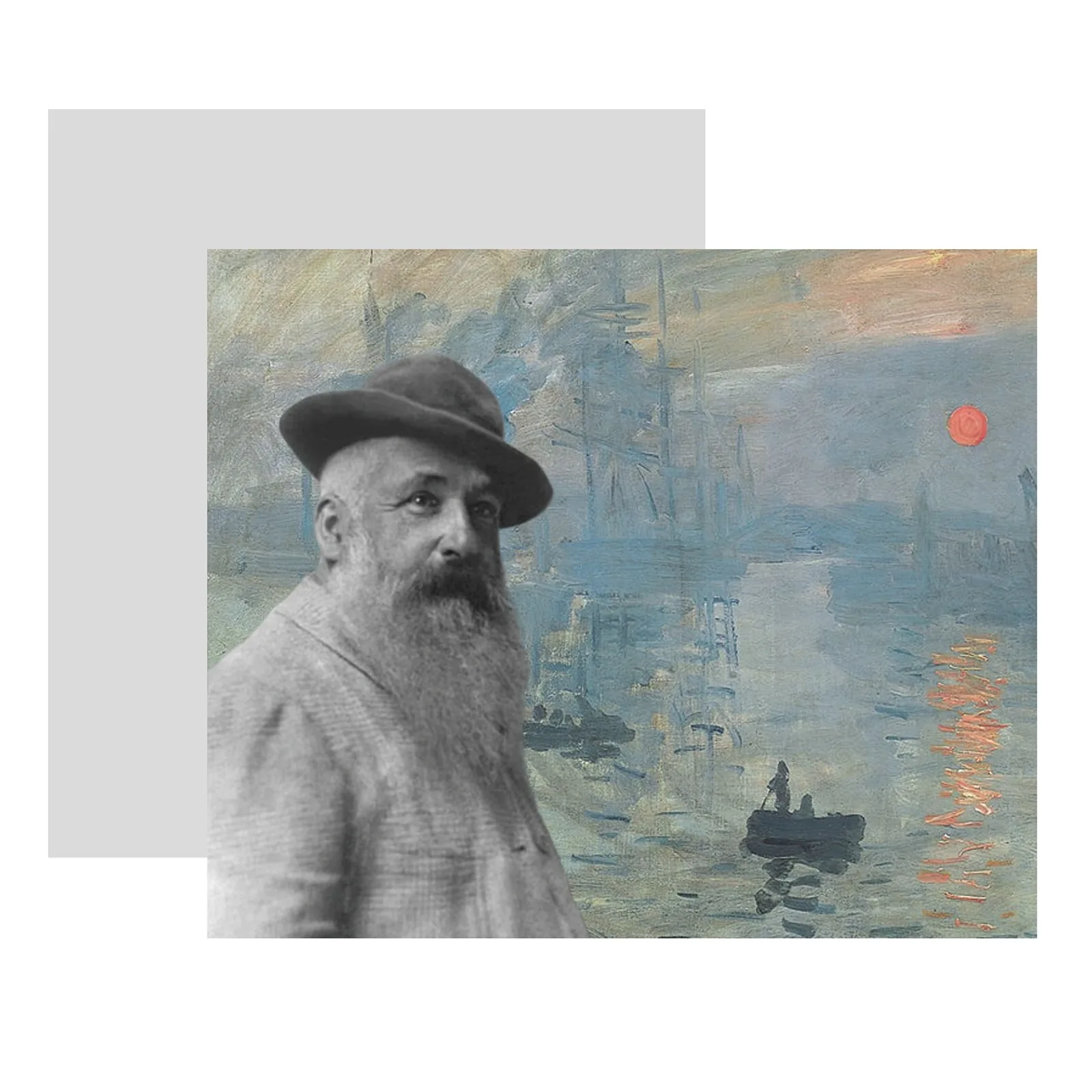
Oscar-Claude MONET
(1840 –1926)
The most consistent and prolific practitioner of the movement's philosophy of expressing one's perceptions before nature, especially as applied to plein air landscape painting.
Monet's ambition of documenting the French countryside led him to adopt a method of painting the same scene many times in order to capture the changing of light and the passing of the seasons
Most well-known today for his series of serene water lilies paintings, 19th-century Impressionist Claude Monet was a groundbreaking tour de force in the development of expressive art.
Throughout his long life, which spanned the years between 1840 and 1926, Monet would progress from drawing amusing caricatures of friends to capturing the elusive nuances of natural scenes in various attitudes of light and color. By striving to translate his unique perception of the natural world directly to the canvas, the artist was instrumental in forging an entirely new direction for the world of art.
Monet has been described as “the driving force behind Impressionism". Crucial to the art of the Impressionist painters was the understanding of the effects of light on the local colour of objects, and the effects of the juxtaposition of colours with each other.
Monet's long career as a painter was spent in the pursuit of this aim.
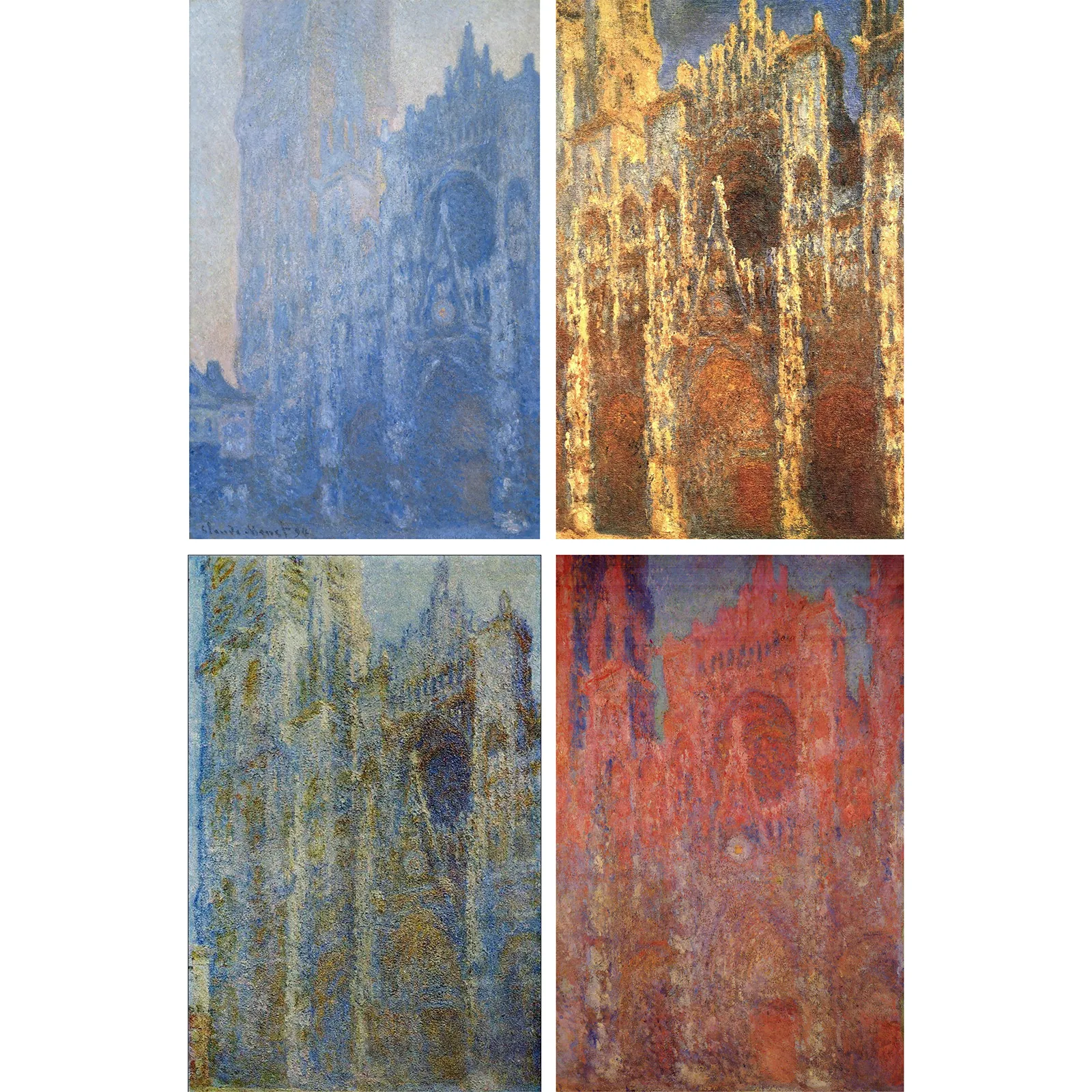
His first series exhibited as such was of Haystacks, painted from different points of view and at different times of the day. Fifteen of the paintings were exhibited at the Galerie Durand-Ruel in 1891. In 1892 he produced what is probably his best-known series, twenty-six views of Rouen Cathedral. In these paintings Monet broke with painterly traditions by cropping the subject so that only a portion of the façade is seen on the canvas. The paintings do not focus on the grand Medieval building, but on the play of light and shade across its surface, transforming the solid masonry.
Other series include Poplars, Mornings on the Seine, and the Water Lilies that were painted on his property at Giverny. Between 1883 and 1908, Monet traveled to the Mediterranean, where he painted landmarks, landscapes, and seascapes, including a series of paintings in Venice. In London he painted four series: the Houses of Parliament, London, Charing Cross Bridge, Waterloo Bridge, and Views of Westminster Bridge. Helen Gardner writes: Monet, with a scientific precision, has given us an unparalleled and unexcelled record of the passing of time as seen in the movement of light over identical forms
Just like William Shakespeare on literature, and Sigmund Freud on psychology, Monet's impact on modern art is tremendous. Monet was among the most influential artists of any era, and his unique color palette, vision and conformation would make a lasting impact on future fine art. Many artists have been influenced by Monet, whose techniques inspired Impressionists and Post-Impressionists such as Vincent van Gogh. In terms of form and scale, the artist's work directly influenced such Abstract Expressionists as Jackson Pollock and Mark Rothko.
Popular artist Andy Warhol reflected the Monet influence in his multiple renditions of a single subject. Claude Monet also laid some of the groundwork for the Minimalist movement of the 1960s. Still extremely popular in his own right, the artist continues to the present day to define both the public's appreciation of art and the perception of beauty in its purest form.
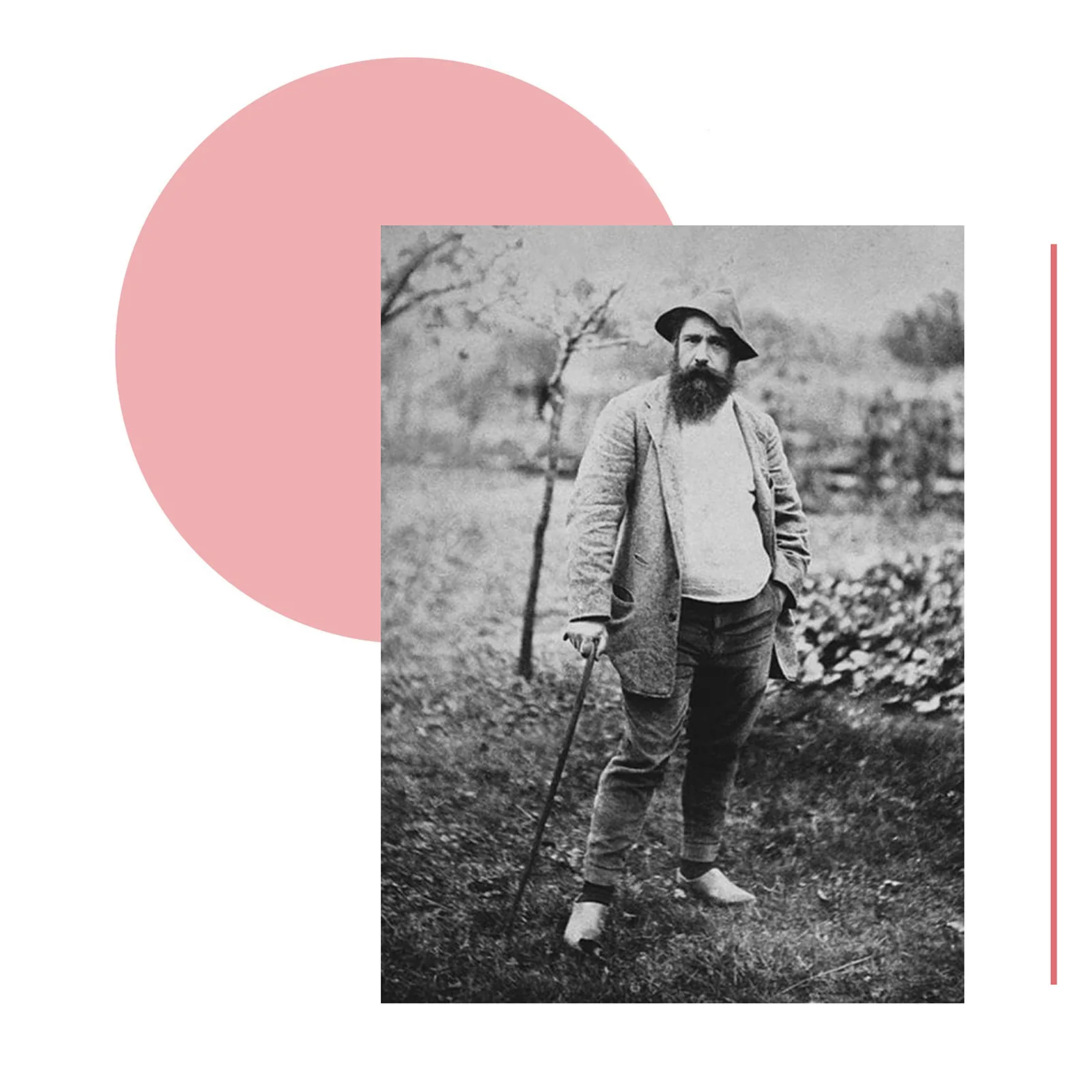
CLAUDE MONET was born on 14 November 1840 on the fifth floor of 45 rue Laffitte, in the 9th arrondissement of Paris.
He was the second son of Claude Adolphe Monet and Louise Justine Aubrée Monet, both of them second generation Parisians.
Despite being baptized Catholic, Monet later became an atheist.
In 1845, his family moved to Le Havre in Normandy. His father wanted him to go into the family's ship-chandling and grocery business, but Monet wanted to become an artist. His mother was a singer, and supported Monet's desire for a career in art.
On 1 April 1851, Monet entered Le Havre secondary school of the arts.
After becoming known for making caricatures of his teachers and people living in town, Monet met landscape artist Eugene Bodin, who taught him how to paint outside.
This led to Monet moving back to Paris, where he became a student at the Academie Suisse. Here, he immersed himself in the Barbizon school, which emphasized making preliminary sketches outside and then bringing the canvas back indoors to paint the natural world in a controlled environment.
Monet wasn't satisfied with this approach and began to paint outside, remaining on the scene from the beginning until the end instead of finishing the work inside of a studio. He was beginning to focus on capturing the evanescence of shifting, natural light, which required faster painting and a new attitude about art. Impressionism actually became possible thanks to manufacturers producing new ranges of paint color in tubes that were easy to transport and use outside rather than having to rely on a studio to mix and store the hues.
At the age of 20, Claude was drafted into the army after drawing a low number in the draft lottery. His service in Algeria was short-lived and ended in a serious illness, but Monet recalled it as a time of special light and color.
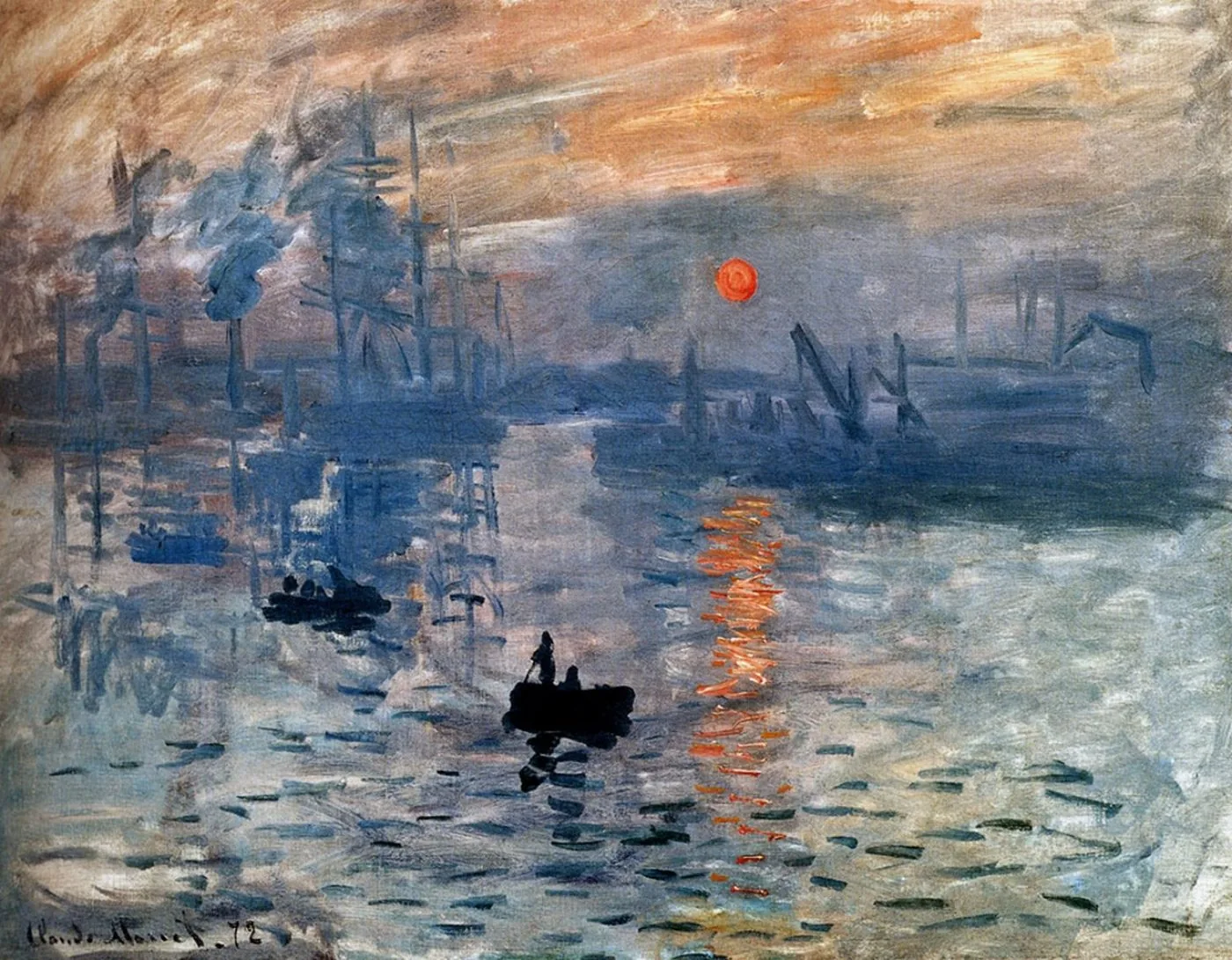
From the late 1860s, Monet and other like-minded artists met with rejection from the conservative Académie des Beaux-Arts, which held its annual exhibition at the Salon de Paris. During the latter part of 1873, Monet, Pierre-Auguste Renoir, Camille Pissarro, and Alfred Sisley organized the Anonymous Society of Painters, Sculptors, and Engravers to exhibit their artworks independently. At their first exhibition, held in April 1874, Monet exhibited the work that was to give the group its lasting name.
When Monet rented a house in Giverny in 1883 he became an avid gardener and started painting the Water Lilies series, about 250 oil paintings in all. Unlike most impressionist works, many of these were close ups of the brilliant surface of the water, immersing the viewer with no horizon to be seen. Seventeen of them feature the Japanese footbridge he had installed in his yard. He wanted his work to surround and envelope the viewer in an oval room, as can be found today at Musée de l'Orangerie.
Starting in 1899, Monet started staying in London where he painted his Houses of Parliament series. He would continue working on the pieces in France, using photographs as references. All the paintings are as seen from his window at St Thomas' Hospital on the Thames, differing only by conditions of weather and time of day.
Death
In 1923 Monet had two surgeries to remove cataracts, which severely altered his vision and changed the way he saw colors, causing him to add more blue tones to some of his waterlilies. He lived to the age of 86, dying on December 5, 1920, of lung cancer, and was buried in Giverny in a modest funeral.
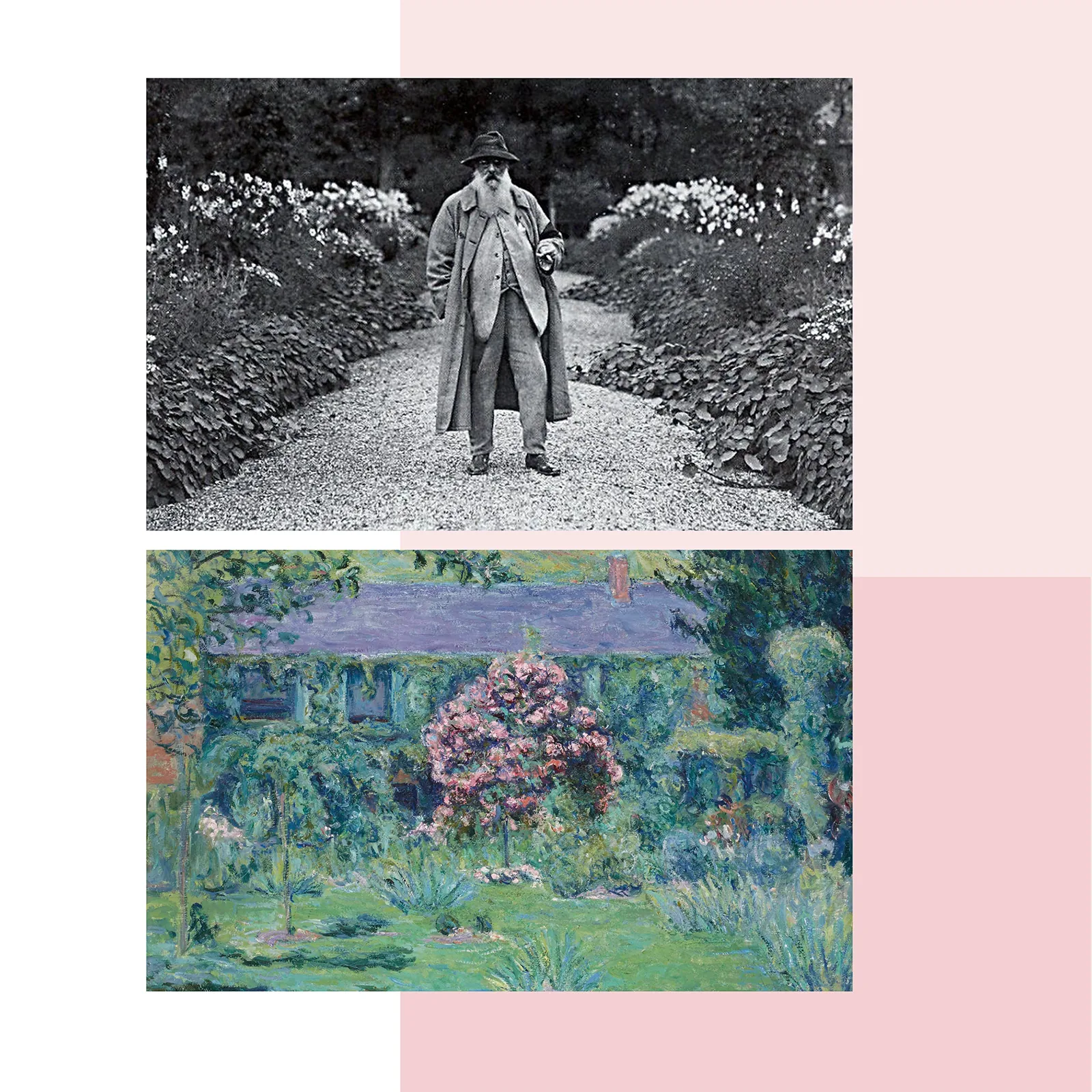
Monet's house and garden
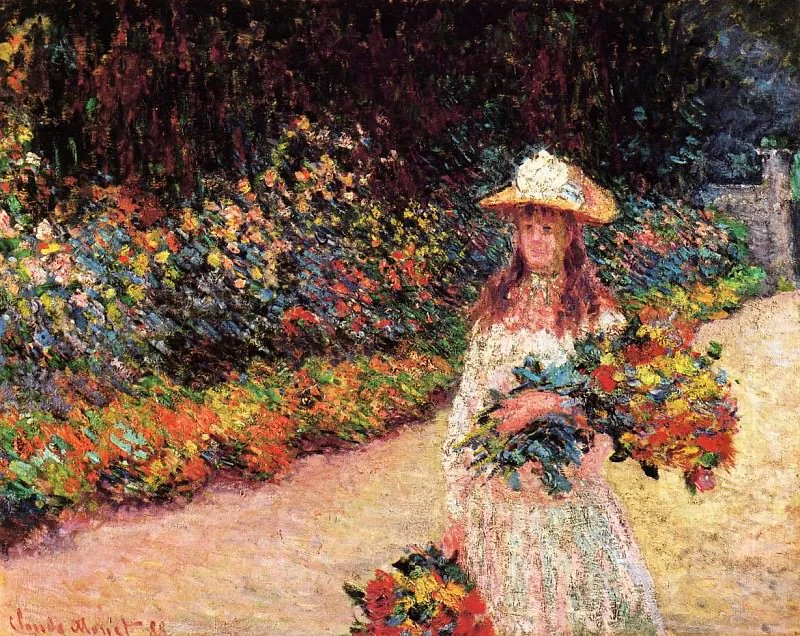
Monet rented and eventually purchased a house and gardens in Giverny. At the beginning of May 1883, Monet and his large family rented the home and 8,000 square metres (2.0 acres) from a local landowner. The house was situated near the main road between the towns of Vernon and Gasny at Giverny. There was a barn that doubled
as a painting studio, orchards and a small garden. The house was close enough to the local schools for the children to attend, and the surrounding landscape offered many suitable motifs for Monet's work.
The family worked and built up the gardens, and Monet's fortunes began to change for the better as his dealer, Paul Durand-Ruel, had increasing success in selling his paintings. By November 1890, Monet was prosperous enough to buy the house, the surrounding buildings and the land for his gardens. During the 1890s, Monet built a greenhouse and a second studio, a spacious building well lit with skylights.
Monet wrote daily instructions to his gardener, precise designs and layouts for plantings, and invoices for his floral purchases and his collection of botany books. As Monet's wealth grew, his garden evolved. He remained its architect, even after he hired seven gardeners.
Monet purchased additional land with a water meadow. In 1893 he began a vast landscaping project which included lily ponds that would become the subjects of his best-known works.
White water lilies local to France were planted along with imported cultivars from South America and Egypt, resulting in a range of colours including yellow, blue and white lilies that turned pink with age.
In 1899 he began painting the water lilies, first in vertical views with a Japanese bridge as a central feature, and later in the series of large-scale paintings that was to occupy him continuously for the next 20 years of his life.[54] This scenery, with its alternating light and mirror-like reflections, became an integral part of his work. By the mid-1910s Monet had achieved:
"a completely new, fluid, and somewhat audacious style of painting in which the water-lily pond became the point of departure for an almost abstract art".— Gary Tinterow
OCTOBER 16, 2020 − MARCH 7, 2021
Staatsgalerie Stuttgart, Konrad Adenauer Strasse 30-32, Stuttgart, Germany
View on the map →APRIL 18, 2020 − AUGUST 23, 2020
The Museum of Fine Arts, Huntington Avenue 465, Boston, Massachusetts
View on the map →